
3D Product Modeling
The 3D product modeling approach is now one of the basic elements in the product design, engineering, and manufacturing sectors. Companies employ sophisticated CAD technologies to produce virtual digital models of their products before commencing production in real life. The digital product models help in visualizing, improving design, and production processes while facilitating fast and effective development processes.
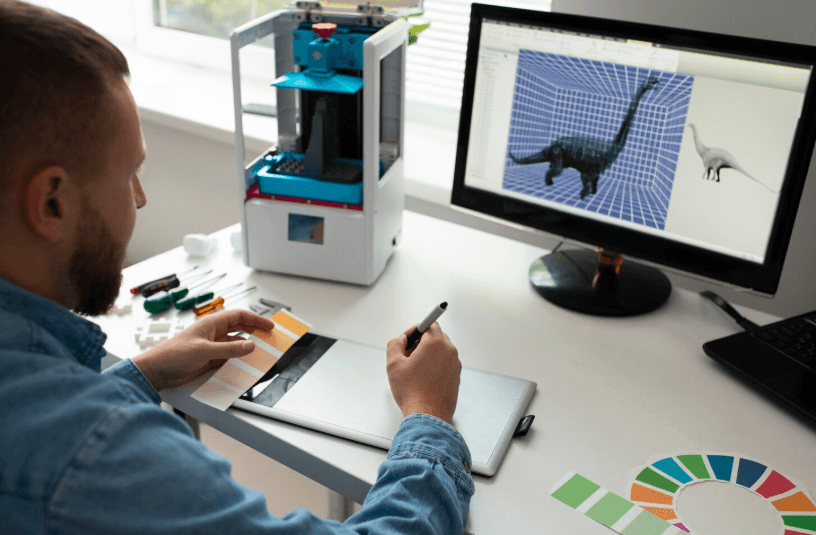
Current 3D product modeling technologies allow engineers and designers to design highly realistic models that have the technical and dimensional characteristics of their products. In this way, businesses can minimize mistakes and facilitate effective communication between engineers during the design and engineering process. The professional product modeling process is common in the manufacture of engineering products, consumer goods, the automotive industry, and technical visualization projects.
Creation of 3D Product Models
The process of creating 3D product models entails the development of virtual models of a product using specially designed CAD software. 3D product models include all aspects required in building a real product, like the shape, size, structure, and functionality of the product. Unlike traditional 2D designs, which can only be viewed from one perspective, 3D product models can be viewed from multiple angles while still retaining their technical features. Such models find wide application during the design process.
The Importance of 3D Product Modeling
Product modeling is very important in modern-day engineering and manufacturing processes, as it helps in creating detailed and manufacturable digital models. Digital modeling facilitates more technical planning and efficient product function development before manufacturing processes. At Design HOK, we provide 3D Product Modeling to international and local clients according to their requirements.
One of the benefits that can be obtained from 3D product modeling is an improved product understanding capability for engineers and manufacturers. This helps in ensuring better analysis capabilities of the structures and functionalities during product development. Another benefit derived from 3D digital modeling includes more flexible engineering changes and efficient project coordination processes.
Software Applications for 3D Product Modeling Using CAD
State-of-the-art CAD software solutions are utilized to create precise digital representations of engineered designs through product modeling. Among them are SolidWorks, AutoCAD, Fusion 360, CATIA, Creo, and Inventor. These software tools enable the process of modeling, assembly, rendering, and technical documentation. Selection criteria of software tools depend on factors such as product complexity and engineering design requirements for each particular project.
Visualization and Rendering of Products
Product visualization is considered the most useful application of 3D product modeling technology. Digital representation of products allows companies to show what their products look like even before the manufacturing and marketing phases start.
In order to do that, rendering capabilities are utilized, which provide the ability to apply different material characteristics, textures, and lights to the models. Such visualization enables better communication and helps with approval, engineering, presentation, and marketing tasks.
Use of 3D Product Modeling in Product Development
The use of 3D product modeling has become an integral aspect of current product development procedures. Through the use of computer modeling, engineers can test their ideas and make further analyses on product structures before going into physical manufacture. Workflows in simulation, prototype design, design for assembly, and engineering analysis are greatly supported through the use of digital models. This ensures that any possible challenges in product design can be sorted out before manufacture takes place.
Professional 3D modeling software applications also ensure smooth interactions among development teams, manufacturers, and clients involved in product development procedures.
Product Prototype Designing and Manufacturing Preparation
3D models are increasingly being applied in prototype design and manufacturing preparation procedures. The precise 3D CAD models allow CNC milling, manufacturing, and 3D printing to create prototypes. As for prototype testing, it helps engineers to check several features of the products, namely their dimensional accuracy, strength, and ease of assembly.
Advantages of Professional 3D Product Modeling
Professional 3D product modeling provides many advantages, which can be very useful at both stages of designing and manufacturing products. This method can contribute to making the engineering work more precise, to preparing for the process of manufacturing, and to maintaining the quality of the products.
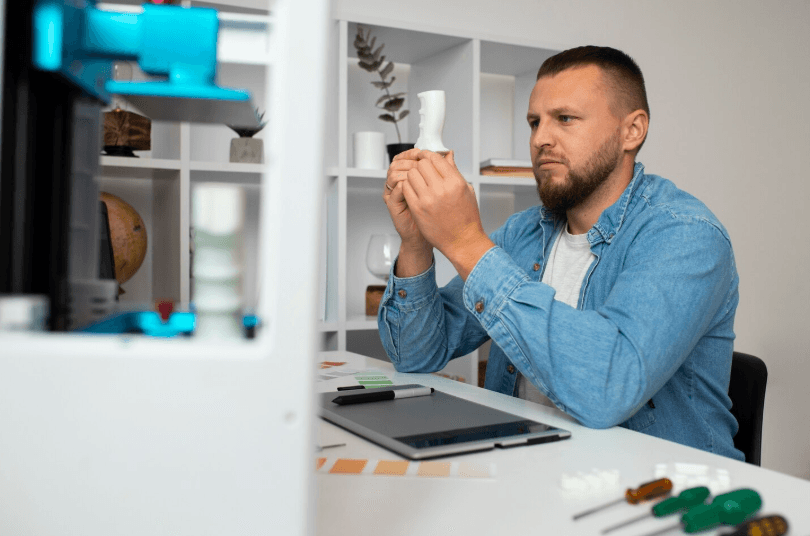
Highly developed computer technologies enable better collaboration among all people involved in product creation. It provides additional information concerning technical characteristics and the appearance of those products. Also, professional modeling ensures better organization and economy during the process of product development.
The Future of 3D Product Modeling
Some of the innovative products that will define the future of 3D product modeling include software powered by artificial intelligence, cloud computing technology, and simulation software. They help to optimize engineering procedures and digital workflow management. Modern industries are increasingly using smart engineering solutions for developing, visualizing, and optimizing their product manufacturing. With the further evolution of digital engineering, 3D product modeling is going to play an important role in the industry.
Conclusion
3D product modeling has transformed modern product development by improving visualization, engineering precision, and manufacturing preparation. The technology facilitates efficient creation of quality digital products and enables effective processes of design and production. The professional 3D modeling for product design may be used in different sectors to aid in effective communication, reduce errors, and make the processes involved in the design and manufacture of their products efficient. Companies that adopt the technology will have quality products and efficient engineering services.
FAQs
1. What is 3D product modeling in engineering and manufacturing?
The development of a real-time product model through the use of software such as Computer-Aided Design (CAD) software is referred to as 3D product modeling.
2. How can 3D product modeling help in product development?
Using 3D product modeling, companies get a glimpse of their products before the development process begins.
3. In which sectors are 3D product modeling services used?
The sectors that make use of the services offered by 3D product modeling include manufacturing, automotive, aerospace, industrial machinery, medical devices, consumer product design, and more.
4. What software applications are used for creating models of products in three dimensions?
Some of the common software used for creating models of products in three dimensions are SolidWorks, Fusion 360, AutoCAD, CATIA, Creo, and Inventor.
5. How is 3D product modeling beneficial to the manufacturing process?
With accurate design via computers, there will be no errors in manufacturing, assembly, machining, and fabrication.
6. How is rendering related to 3D product modeling?
Through the use of materials, lighting effects, texture, and shadows in the modeling process, 3D product modeling is transformed into a realistic visual product. Through this method, 3D visualization is improved.
7. Does 3D modeling play an important role in developing prototypes?
Indeed, 3D modeling has been widely used in prototype development in CNC machining, manufacturing, and 3D printing services.