
Introduction
3D modeling for manufacturing is a very important process in designing a new product, as well as in the production of industrial machines. The industry uses advanced techniques of 3D computer-aided design to enhance product design processes. Through the use of these methods, industries can make production processes easier and more precise. Earlier forms of manufacturing were done using traditional techniques that did not give room for visualization. With advanced 3D modeling techniques, product designers can now model products digitally even before production begins.

Comprehension of 3D Modeling in Manufacturing
The procedure of 3D modeling in manufacturing entails the creation of three-dimensional models of products and parts on a computer using CAD software. This involves the inclusion of multiple dimensions as well as other information required for the purpose of engineering computations and manufacturing.
Unlike in the case of the preparation of two-dimensional drawings, the use of 3D modeling facilitates visualizations and changes before commencing manufacturing operations. 3D modeling is used by industries for prototype design, CNC machining, and assembly, among other uses.
Importance of 3D Modeling in Manufacturing
Manufacturing industries require high levels of precision, efficiency, and product consistency. Accuracy in designs, visualization, and streamlined production processes are some of the benefits of using 3D models. This way, engineers will be able to study dimensions, structures, and functionalities before initiating production. Moreover, the process of developing products will become faster due to the easy modification of designs. In addition, digital models support modern manufacturing technologies such as CNC machining, laser cutting, injection molding, and 3D printing. 3D modeling for manufacturing is a process for creating models with measurements.
Computer-Aided Design (CAD) Modeling and Product Design
CAD modeling is one of the most important factors in today’s manufacturing processes. The CAD application makes it possible for engineers to design digital models that are ready for manufacturing and that come with exact measurements. 3D modeling for manufacturing is a way of producing CAD models with accuracy.
Using professional CAD models makes it easier to:
- Visualize products
- Design products
- Assemble products
- Create prototypes
- Document manufacturing processes
- Plan manufacturing processes
Some of the popular 3D CAD software include SolidWorks, AutoCAD, CATIA, Fusion 360, and Creo are the best choices. 3D modeling for manufacturing can be performed on this softwares easily. The purpose of mentioning them is not to promote; they already have millions of users, we just share them for awareness.
Role of 3D Modeling in Prototype Development
Prototype development is an important stage in manufacturing processes. The 3D modeling process helps engineers build an exact prototype before actual manufacturing. CAD modeling in digital form serves as a base for CNC machining, manufacturing, and 3D printing of physical prototypes.
Prototypes are employed by engineers to test the functioning, dimensions, and assembly, as well as ensure reliable operation under realistic conditions. Prototype testing also helps identify production challenges and improve product quality before mass manufacturing begins.
Assembly Modeling in the Process of Manufacturing
Industrial products can be created through combining many different components that have their unique functions within an industrial product. Assembly modeling is the process that enables designers to combine these components into one digital product for engineering purposes and further manufacturing. This step minimizes possible production mistakes, increases the efficiency of assembly, and provides good communication between design and manufacturing engineers through detailed knowledge about the product assembly procedure.
Product Rendering and Visualization
Modern manufacturing industries also use 3D rendering technologies for realistic product visualization. Rendering transforms CAD models into professional visual presentations using materials, textures, and lighting effects. High-quality renderings are valuable for product approvals, client presentations, product catalogs, and marketing purposes. Realistic visualization helps businesses communicate product concepts more effectively.
Simulation and Analysis for Engineering
Simulation and analysis have been indispensable to engineering practice for some time now. Through the use of computer software programs, engineers can analyze the stress, temperature, dynamics, and loading capacity of a model before actual construction. This process will ensure that the model is not flawed in any way.
Advantages of Using 3D Modeling in Manufacturing Processes
The professional process of 3D modeling can provide many advantages for different manufacturing organizations. This technology allows for improving accuracy, reducing costs, and increasing the quality of products manufactured. Apart from providing benefits related to accuracy and cost reduction, using CAD modeling also helps in collaborating between teams, decreasing development time, and minimizing waste.
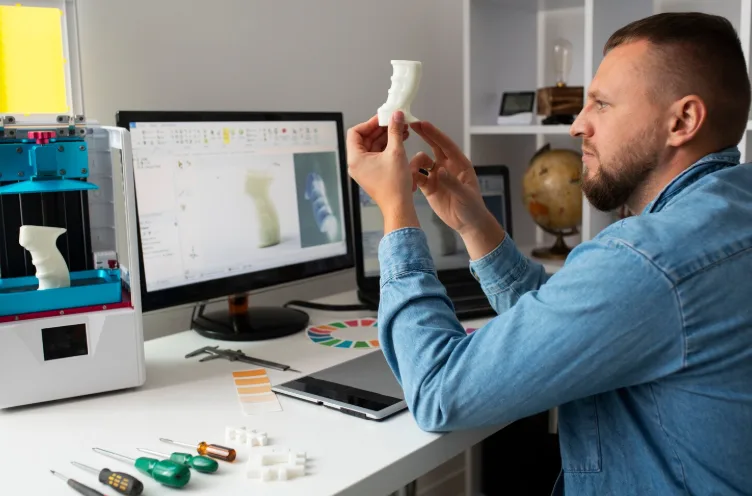
Professional CAD models help in more efficient manufacturing and avoiding production errors. Organizations implementing the latest 3D modeling systems can have many advantages in the manufacturing process. Design HOK provides 3D Modeling for Manufacturing that helps to create models precisely.
Possible Future Trends for the Industry of 3D Modeling in Manufacturing
There is no doubt that future trends for the field of manufacturing keep changing due to the emergence of innovative software solutions. Modern CAD systems provide features such as artificial intelligence, cloud computing, real-time rendering, and simulations.
To be successful in the modern environment, the use of smart manufacturing methods and digital designs has become inevitable. As technological progress in manufacturing keeps growing, there will be more opportunities for 3D modeling in manufacturing.
Conclusion
The application of 3D modeling in manufacturing has revolutionized the design, analysis, and manufacturing process. The accurate creation of digital models helps to enhance the precision of the process and make it more efficient and cost-effective. Professional 3D modeling covers all stages of manufacturing, from designing the products to manufacturing. In the current era, with the continuous use of CAD software by companies, the role of 3D modeling will keep increasing. Those companies that adopt professional 3D modeling will be able to achieve success in manufacturing.
FAQs
1. Explain 3D modeling in manufacturing.
In manufacturing, 3D modeling involves the creation of models of products using CAD technology. 3D modeling improves the quality of design by allowing visualization, among others.
2. Why is 3D modeling significant in manufacturing?
3D modeling makes it easy for manufacturers to visualize their designs and ensure precision in engineering. Additionally, 3D modeling allows efficient development of products.
3. State the industries that use 3D modeling for manufacturing.
Examples of industries that utilize 3D modeling in manufacturing include the manufacturing industry, automotive, aerospace, engineering, medical device manufacturing, and consumer goods manufacturing.
4. What software is commonly used for manufacturing 3D modeling?
Common software includes SolidWorks, AutoCAD, Fusion 360, CATIA, Creo, and Inventor. These tools help create accurate, production-ready CAD models.
5. Can 3D models be used in CNC machining?
Yes, CAD models can be applied in CNC machining. They enable measurements that are required to carry out an effective manufacturing process.
6. What is assembly modeling in manufacturing?
Assembly modeling is a practice in which various components are combined to make an entire product. It allows ensuring that a product will be manufactured effectively.
7. Why is prototype development important for manufacturing?
The prototype enables one to understand whether the design of the product will work efficiently in real life before manufacturing takes place.